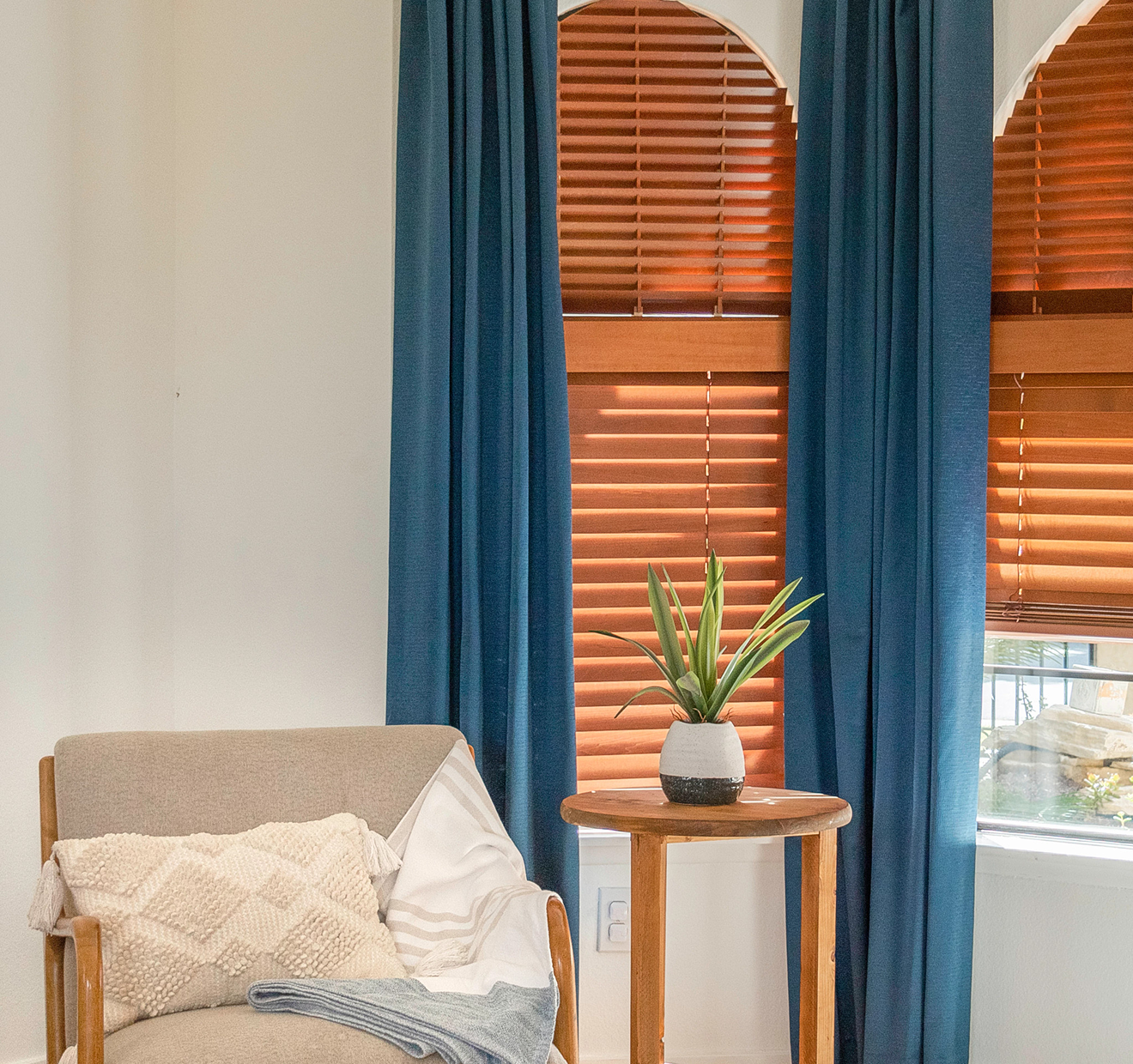
Choosing the right window treatments is easier when you understand the terms designers and manufacturers use. This glossary explains common fabric types, weave patterns, and industry phrases you may see when shopping with 3 Day Blinds. Each entry includes plain-language definitions, practical tips, and notes on where you might encounter these fabrics in blinds, shades, drapery, or shutters.
Not sure which fabric fits your space? Book a Free In-Home Consultation.

A synthetic fiber known for its softness, lightweight feel, and resistance to fading.
A variation of the plain weave where groups of warp and filling threads are interlaced to resemble a woven basket.
A fine, lightweight, transparent fabric usually made of cotton or cotton blends.
Fabrics made from two or more fibers combined in the same yarn, such as polyester/cotton.
A heavy fabric woven with raised floral or geometric patterns, often metallic.
A strong, durable, plain-woven fabric made from cotton, linen, or synthetics.
The main structural component of plant fibers such as cotton, linen, or rayon.
Fabric with a velvety pile created by fuzzy yarns.
A natural fiber known for softness, breathability, and versatility.
A reversible fabric with woven patterns, typically floral or geometric.
Silk fabric woven from uneven threads that create a crisp texture with subtle sheen.
Decorative stitching used to create patterns or embellishments on fabric.
The front or “right side” of a fabric, meant to be displayed.
The basic unit of textiles, either natural (cotton, silk, flax) or synthetic (polyester, nylon).
Fabric treated or manufactured to resist ignition and reduce flame spread.
Fabric treated to resist ignition and slow flame spread.
The plant from which linen fiber is made.
A printed fabric with scenic or pastoral motifs, often in a single contrasting color.
A distinctive V-shaped weaving pattern resembling fish bones.
A decorative embroidery style featuring ornate floral designs, originating in 17th-century England.
Fabric with intricate woven designs created on a Jacquard loom.
A natural fiber made from flax, known for strength and cool texture.
A fabric woven to create a quilted, padded effect without actual padding.
A synthetic fiber noted for strength, elasticity, and resistance to abrasion.
A synthetic fiber known for stain resistance, moisture resistance, and colorfastness.
A teardrop-shaped ornamental design of Persian origin.
A synthetic fiber valued for strength, resistance to stretching, and color retention.
A weave structure with a smooth, lustrous surface, usually made from cotton.
A weave that produces a smooth, glossy surface.
A type of silk fabric with an irregular, slubby (thicker in some parts than in others) texture.
Lightweight, translucent fabric that filters light while providing privacy.
A natural fiber spun from silkworms, prized for luster and strength.
Man-made fibers such as polyester, nylon, acrylic, or olefin.
A semi-synthetic fiber made from cellulose. Soft, drapable, and silky to the touch.
A sheer, lightweight fabric made from cotton or polyester blends.
The lengthwise yarns held in tension on a loom during weaving.
The interlacing of warp and weft threads to create fabric.
The horizontal yarns inserted across the warp during weaving.
Continuous strands of twisted fibers used in weaving or knitting fabric.
Related Categories